
Connecting the pieces of the sustainability challenge
Sustainability is becoming increasingly difficult to separate from everyday business, investment and technology decisions. AI can help organisations analyse complex problems and develop new solutions, but its growth also increases demand for energy, water and digital infrastructure. Climate and nature-related disruption can begin in one location and travel through supply chains, infrastructure and financial markets, affecting organisations thousands of miles away.
At the same time, different organisations see different parts of the problem. Investors focus on returns and risk, technology companies understand infrastructure demands, local authorities balance housing and community needs, utility providers manage limited resources, while researchers can provide evidence about longer-term impacts.
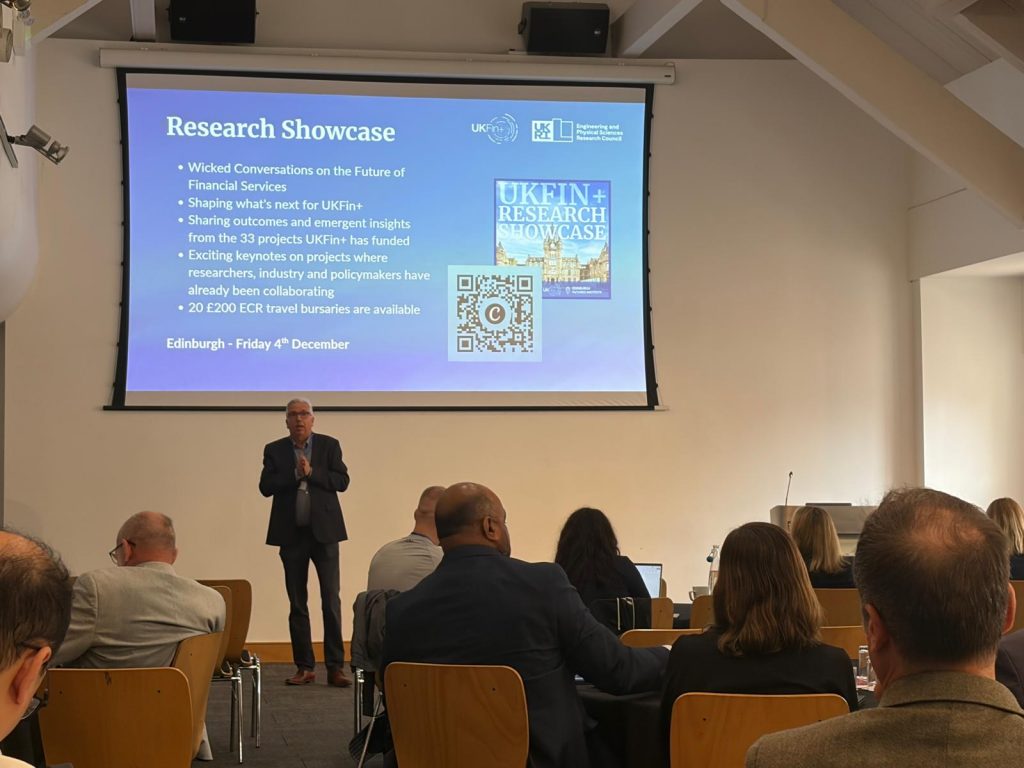
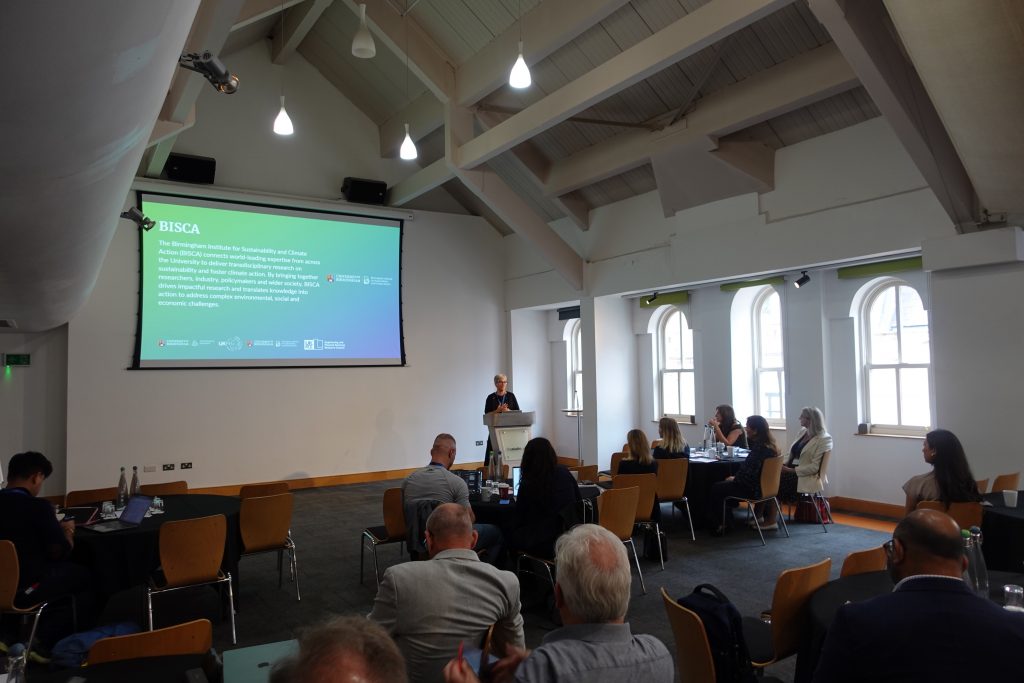
The Sustainable Finance Forum, developed collaboratively by UKFin+, the Birmingham Institute for Sustainability and Climate Action (BISCA) and the Institute for Data and AI (IDAI), was designed to bring those perspectives together and ask a practical question: How can finance, technology, research and collaboration support better sustainability decisions when the challenges cross sectors, disciplines and organisational boundaries?
Setting the scene for collaboration
Professor Karen Elliott, Director of UKFin+, opened the Forum by reflecting on sustainability as a complex system rather than a collection of separate problems. Environmental, economic and social systems interact, meaning that a decision which appears rational in isolation may have consequences elsewhere.
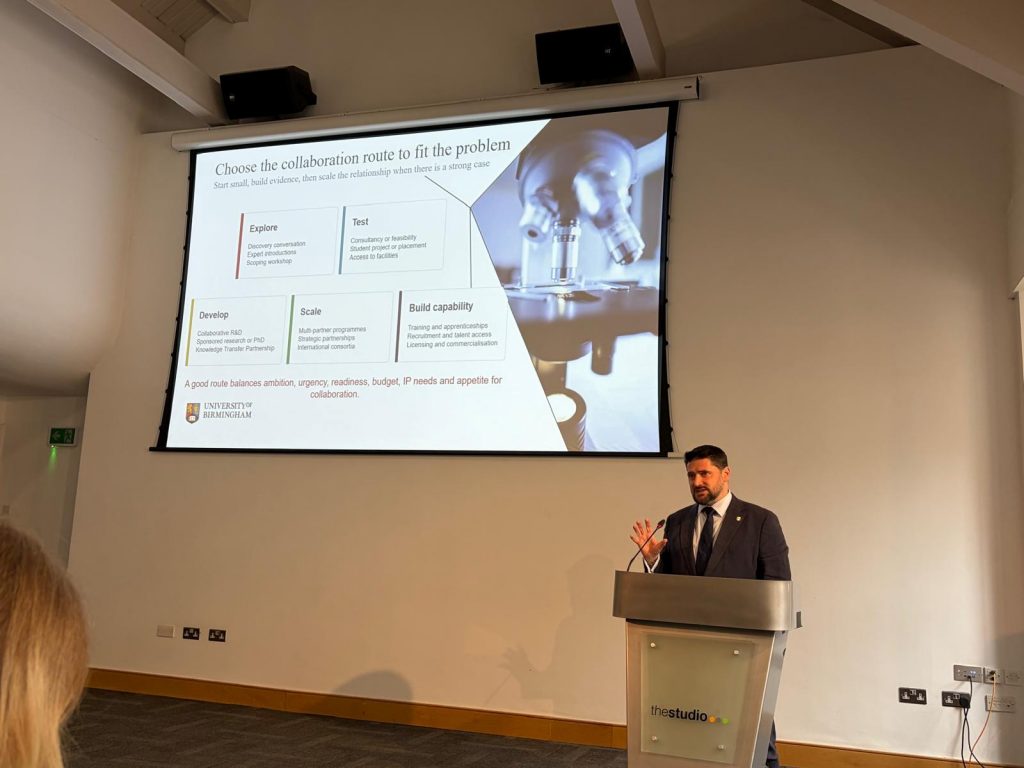
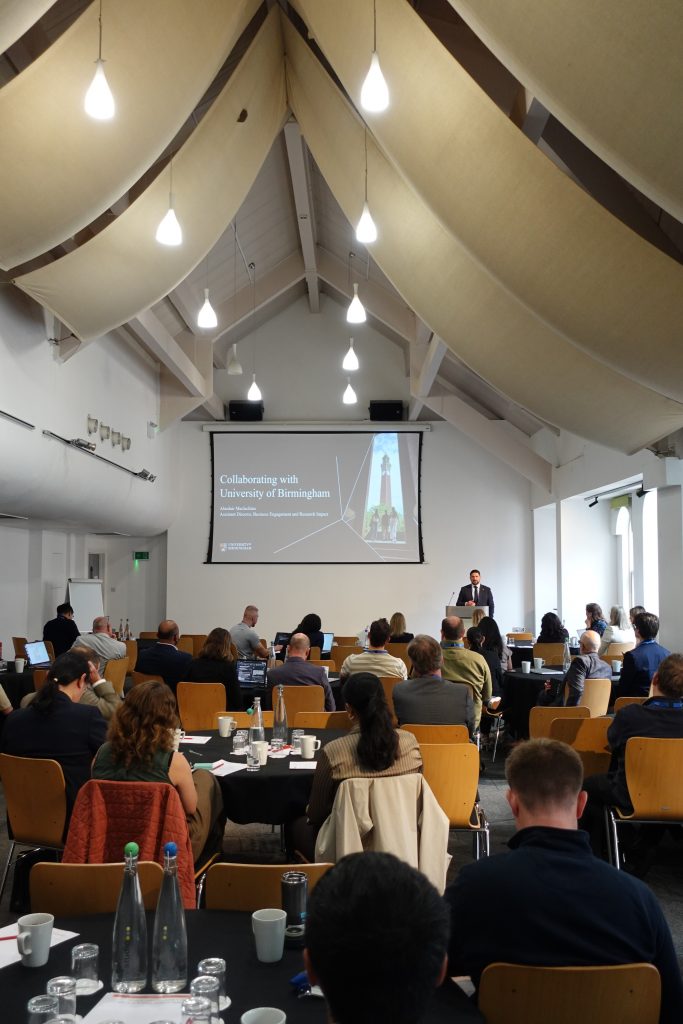
Alasdair MacLachlan from the University of Birmingham’s Business Engagement team then brought the conversation into an industry context. His message was simple: start with the business challenge, not the funding scheme. Businesses can engage with universities in many ways, from initial scoping conversations, consultancy and feasibility projects through to Knowledge Transfer Partnerships, collaborative R&D and longer-term strategic partnerships. Funding routes including UKRI, Innovate UK and Horizon Europe can help share the cost and risk where there is a strong case for collaboration.
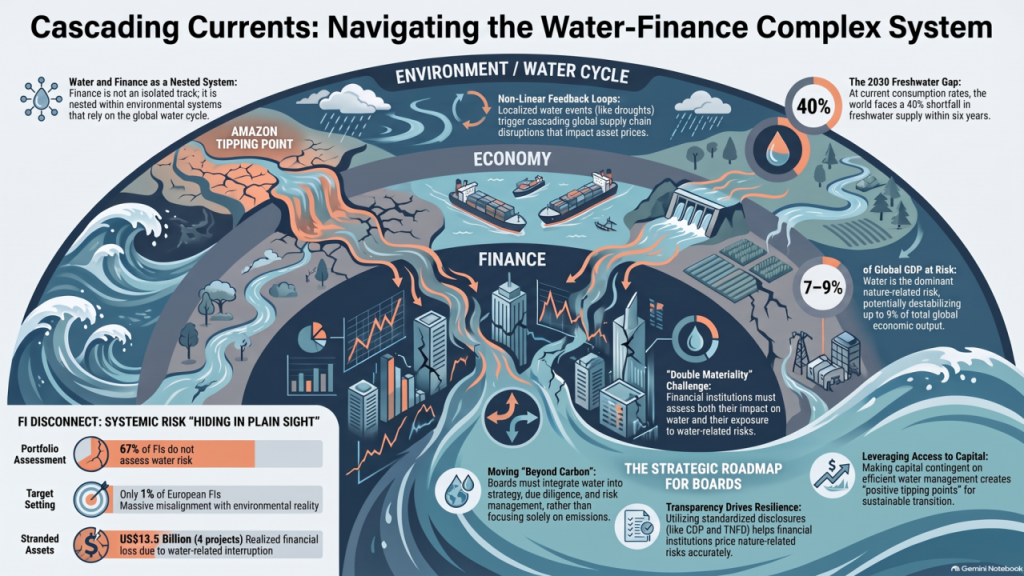
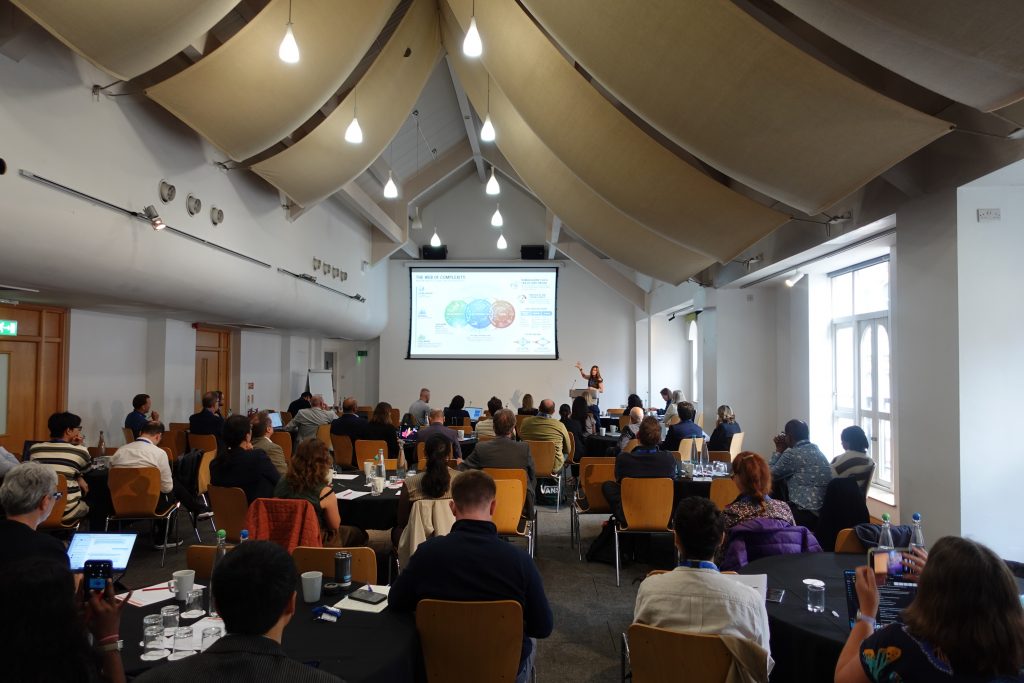
Annabel Nelson’s keynote provided the context for the discussions that followed. Structured around three misconceptions about sustainable finance, she challenged the idea that sustainability is primarily about labels and reporting, or that the transition is simply a data problem. She argued that organisations are often surrounded by information but still lack the relevant data for the decision in front of them. She also challenged narrow approaches to sustainability, using water to demonstrate how an environmental issue can quickly become an economic and financial one.
One example was Taiwan’s 2021 drought. Water shortages affected semiconductor production at a time when global chip supply chains were already under pressure. The consequences spread far beyond the location of the drought, affecting industries dependent on those chips. The example illustrated why risks such as water scarcity cannot be considered solely as environmental issues; they can become operational, supply-chain and financial risks.
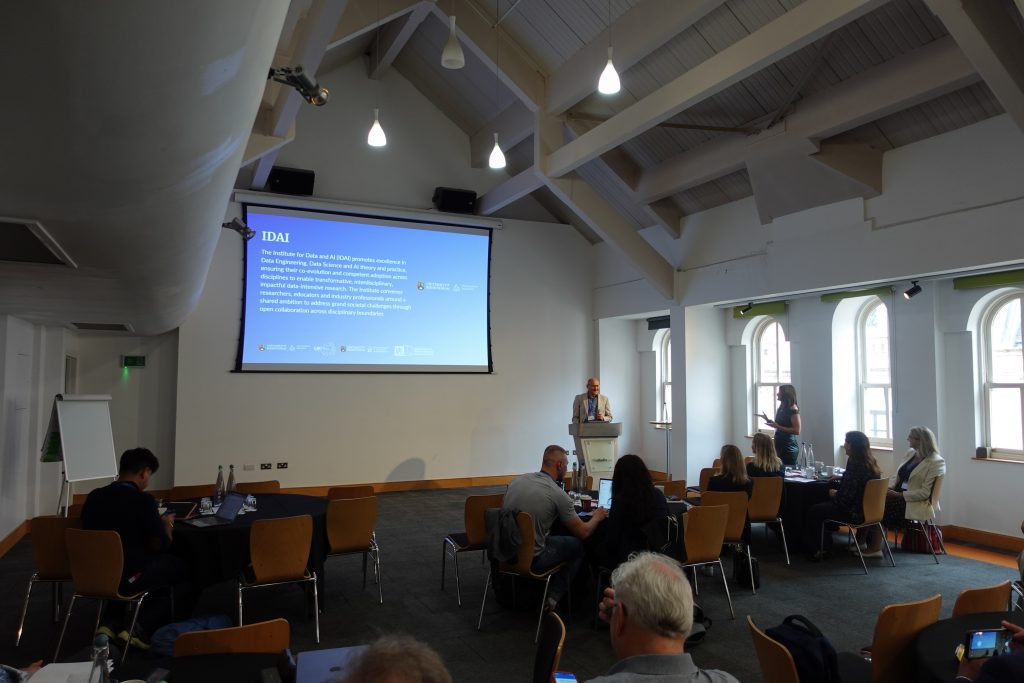
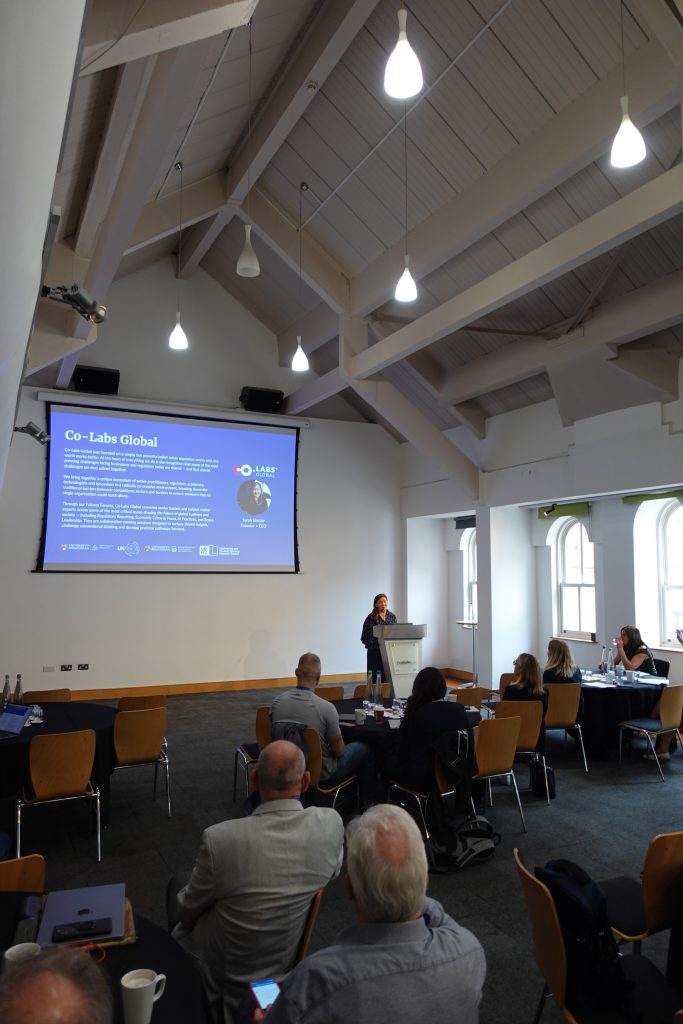
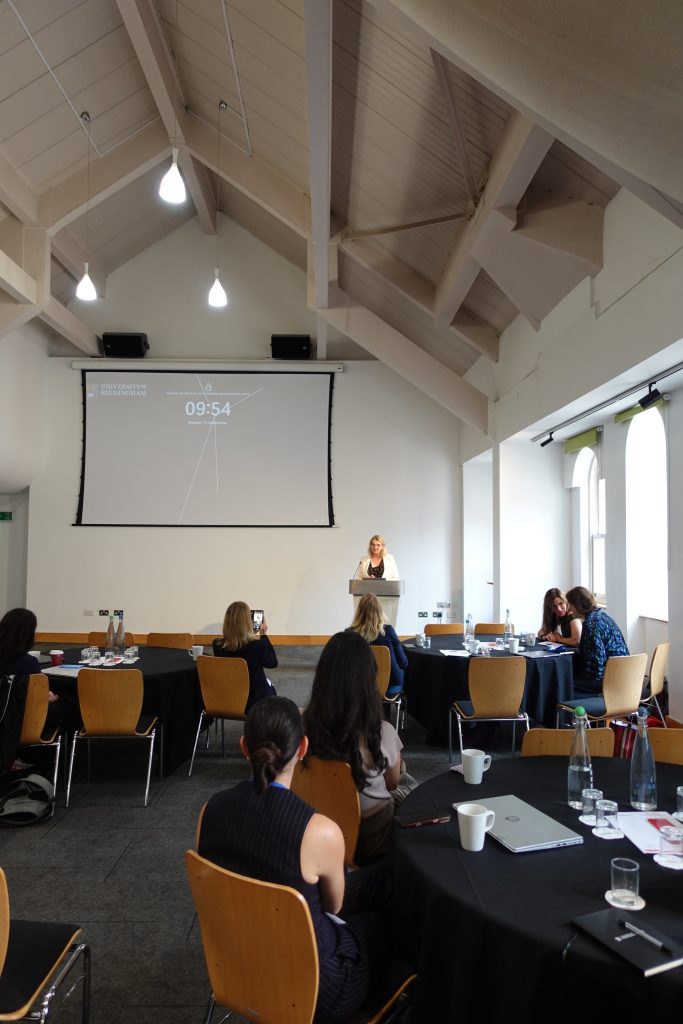
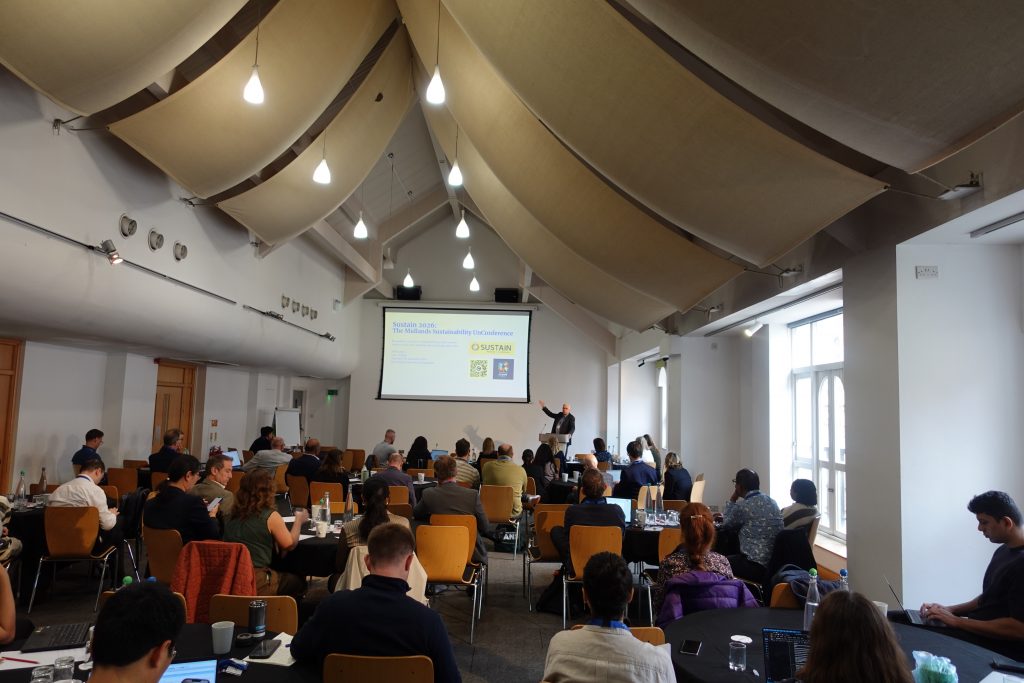
Four questions, but many shared challenges
Rather than using traditional conference panels, participants moved into facilitated discussions around four themes.
- Is AI Too Thirsty? This discussion explored the growing demands AI and data centres place on water, energy and land, and how these pressures can affect local communities and infrastructure. Participants also considered the other side of the equation: what benefits do host communities receive, from jobs and investment to opportunities such as waste-heat reuse and growth of the wider digital economy?
- Resilience and Regulating Cloud Providers This discussion explored how growing reliance on cloud and AI services can create systemic risks, particularly when a small number of providers support many organisations. Participants considered how resilience planning needs to account for interconnected dependencies across cloud services, data centres, energy, water and telecommunications, alongside the challenge of coordinating regulation and responsibility across organisations and borders.
- Priorities, Strategy and Incentives This discussion explored how investment and business decisions can better account for long-term sustainability risks, including water, AI and the pressures placed on shared local resources. Participants considered whether organisations need to look beyond individual assets and financial returns to understand what a particular place and its infrastructure can realistically sustain, and how finance and incentives could encourage more responsible decisions.
- Data, Tech and AI for Sustainability Solutions This discussion examined the gap between academic research and real-world industry challenges. Participants asked whether problems genuinely required new technology, or whether the real barriers were poor data, lack of access, unclear ownership or trust.
What did the workshops tell us?
Although the four workshops started from very different questions, they repeatedly came back to the same challenge: sustainability decisions are rarely contained within one organisation, discipline or system. Finance, technology, infrastructure, regulation, natural resources and communities are interconnected, yet decisions are often still made separately. The value of the Forum was in bringing those perspectives together and testing what changes when people begin to look at the same problem from different angles.
What does the infrastructure mean for the place in which it operates?
A data centre may support national digital growth while drawing water and electricity from systems that also support homes, businesses and other infrastructure locally. Conversely, investment may create jobs, strengthen digital capability or provide opportunities to reuse waste heat. Participants therefore questioned whether the real research gap is around net local impact: what resources are consumed, what value is created, who experiences the costs and who receives the benefits?
The group also emphasised that national averages can obscure local constraints. A development that looks manageable at national level may place considerable pressure on a particular electricity network or water catchment. Better evidence at this level could help technology companies, investors, local authorities and communities make more informed decisions about future AI infrastructure.
Sustainability becomes more actionable when translated into business risk
The discussion on priorities, strategy and incentives showed that climate and nature risks often become real for organisations when they appear as something more familiar: supply-chain disruption, operational risk, business continuity problems, insurance costs or financial loss. It also highlighted a more fundamental challenge around taxonomy and reporting consistency. Different organisations may use the same sustainability terms but define or measure them differently, making comparisons difficult and potentially producing very different conclusions from similar underlying data. Without a common language and clearer reporting frameworks, it becomes harder for investors, businesses and policymakers to understand whether they are assessing the same risks and outcomes.
Long-term ambitions meet short-term incentives
A recurring tension across the Forum was the mismatch between long-term sustainability goals and shorter-term budgets, investment cycles and performance measures. Participants used the distinction between outputs and outcomes to explore this. If the desired outcome may take ten or twenty years to become visible, what can organisations measure today to show that they are moving in the right direction? The discussion also showed that hard constraints often influence behaviour faster than broad sustainability commitments. Capital availability, supply shortages, insurance, regulation and infrastructure capacity can quickly change decisions. This creates an important area for further work: identifying which indicators genuinely signal long-term resilience, and how to value preventative investment before a crisis demonstrates its worth.
AI needs critical thinkers, not simply more users
The technology discussion produced another practical message: understand the problem before deciding that AI is the solution. Participants highlighted the importance of critical thinking, analytical capability and subject-matter expertise. AI may process large quantities of information and identify patterns quickly, but people still need to understand the context, challenge its outputs and remain responsible for the decision.
The “human in the loop” therefore became an important principle for developing systems that are genuinely useful rather than technologically impressive but poorly matched to the problem. For universities, this creates questions that extend well beyond computer science: how should AI literacy be developed across disciplines, and how can researchers work with industry experts who understand the underlying processes and decisions?
From discussion to research and collaboration
Perhaps most importantly, bringing different perspectives into the same conversation changed the questions being asked. Assumptions were challenged, connections between apparently separate problems became visible, and potential areas for collaboration began to emerge.
The Forum therefore generated not only conclusions, but a set of questions that could form the basis of future research and partnerships:
- How can the full local impact and benefit of AI and data-centre infrastructure be measured?
- How can businesses and investors identify risks created by shared systems and places?
- Which indicators can connect today’s actions with sustainability outcomes that may take decades to materialise?
- How can more consistent taxonomies, definitions and reporting approaches make sustainability data genuinely comparable and decision-useful?
- How can investment in resilience become attractive before a crisis reveals its value?
- How should regulation evolve alongside rapidly changing technologies?
- How can universities make interdisciplinary expertise easier for industry and policymakers to access and apply?
These questions create opportunities for new research, industry collaboration, demonstrators, student projects, policy work, hackathons and future funding partnerships.