
How can lenders help more people access fair and affordable credit? How can financial data be used to support better decisions rather than simply produce faster rejections? And how can saving through payroll help households build greater financial resilience?
These questions were at the centre of the UKFin+ Sandpit, held at the University of Birmingham in collaboration with incuto.
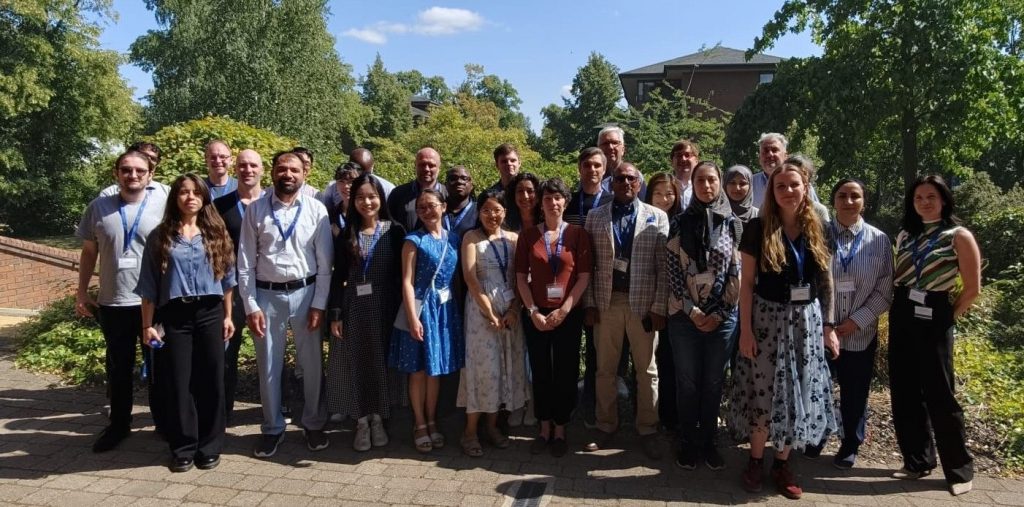
The event brought together 19 academics from 16 universities across the UK. Participants represented a wide range of disciplines, including computer science, mathematics, behavioural science, economics, business, design, law and policy.
Over one intensive day, they worked together to develop practical research ideas addressing real challenges within community finance and the credit union sector.
Why UKFin+ chose an inclusive finance sandpit?
Over the course of the UKFin+ programme, we have funded more than 30 research projects addressing complex challenges across financial services. As we approached the allocation of our remaining research funding, we wanted to give greater attention to the theme of inclusive finance and ensure that the final projects supported work with a clear potential to benefit people and communities. This naturally led us to the credit union and community finance ecosystem.
Credit unions and community lenders play an important role in helping people access affordable credit, build savings and improve their financial resilience. However, they often work with fewer resources and less advanced technology than large financial institutions, despite serving customers whose circumstances may require greater understanding and more personalised support.
Rather than issuing a traditional open funding call and asking researchers to develop projects independently, UKFin+ decided to use a sandpit model. This enabled academics from different disciplines and universities to hear directly from an industry partner, explore the challenges together and build teams around the most promising ideas.
Our remaining research funding has been set aside to support two collaborative projects emerging from the sandpit. This means the event was not simply a discussion or networking exercise. It created a direct route from ideas to funded research and practical delivery.
Working with incuto and the community finance sector
incuto is a cloud-based technology platform that helps credit unions and community finance providers modernise their lending, payments and member services. The company works closely with organisations that aim to support people who may not be well served by mainstream financial institutions. Large banks have invested heavily in technology that can assess applications and decline higher-risk customers quickly. While this may improve efficiency, it can also exclude people whose circumstances are not fully represented by a traditional credit score or automated affordability assessment.
Community lenders often take a more rounded view of a person’s financial circumstances. However, their processes can be manual, financial information can be difficult to interpret, and they may lack the tools required to offer more personalised pathways towards affordable borrowing and financial stability.
A different way to develop research
The day began with incuto explaining the challenges, the community finance context and the experiences of the organisations and customers it supports. Participants then took part in a silent idea-generation exercise, contributing questions, assumptions, possible solutions and different perspectives across challenge areas. This allowed people to contribute freely before discussions became shaped by disciplinary boundaries or the most confident voices in the room. The ideas were then grouped into broad themes. Participants selected the areas they were most interested in and formed interdisciplinary teams around them.
During the afternoon, teams developed early research concepts, tested their assumptions with incuto and presented their thinking for feedback. They then began shaping the ideas into potential project proposals. This process encouraged academics to move beyond their usual subject areas and consider how technical, behavioural, economic, legal and human-centred perspectives could work together.
Industry response
At the end of the day, Andrew Rabbitt, CEO of incuto, reflected on the strength of the ideas and the commitment shown by participants. He explained that, while the academics had presented a range of separate concepts, he could see how they fit together into a broader and more ambitious approach to community finance.
Credit unions are an important part of the UK financial system, particularly for people who may struggle to access fair credit elsewhere. However, their contribution is not always well understood or clearly reflected in national discussions about financial inclusion. Generating stronger evidence about their impact could help make the case for greater recognition, investment and policy support.
Andrew closed by encouraging the academics to continue developing their ideas and confirmed that incuto would commit its energy, expertise and support to helping the successful projects succeed.
What happens next?
The sandpit marked the beginning of the research process rather than its conclusion. The teams now have the opportunity to refine their ideas, agree their research approach and develop full collaborative funding proposals.
Two projects emerging from the sandpit will receive UKFin+ funding. The successful teams will work with incuto and draw on its technical, operational and sector expertise. Subject to relevant data protection and confidentiality requirements, incuto may also support the projects through access to anonymised or synthetic data, for example customer journeys, technical documentation and test environments. There is also potential for successful ideas to be tested with credit unions and community finance organisations, helping researchers understand how their work performs in real operational settings.
Collaboration with a clear purpose
The sandpit demonstrated what can happen when academics from different disciplines and institutions are given the time, structure and shared purpose needed to work together. The technical challenges cannot be separated from questions about human behaviour, trust, fairness, regulation and lived experience. Similarly, improving financial inclusion requires more than a new piece of technology. It requires evidence, collaboration and a clear understanding of the people and organisations the work is intended to support.
The event reflected the central purpose of UKFin+: connecting academia and industry to address complex financial services challenges and turn collaborative ideas into practical research with real-world impact.