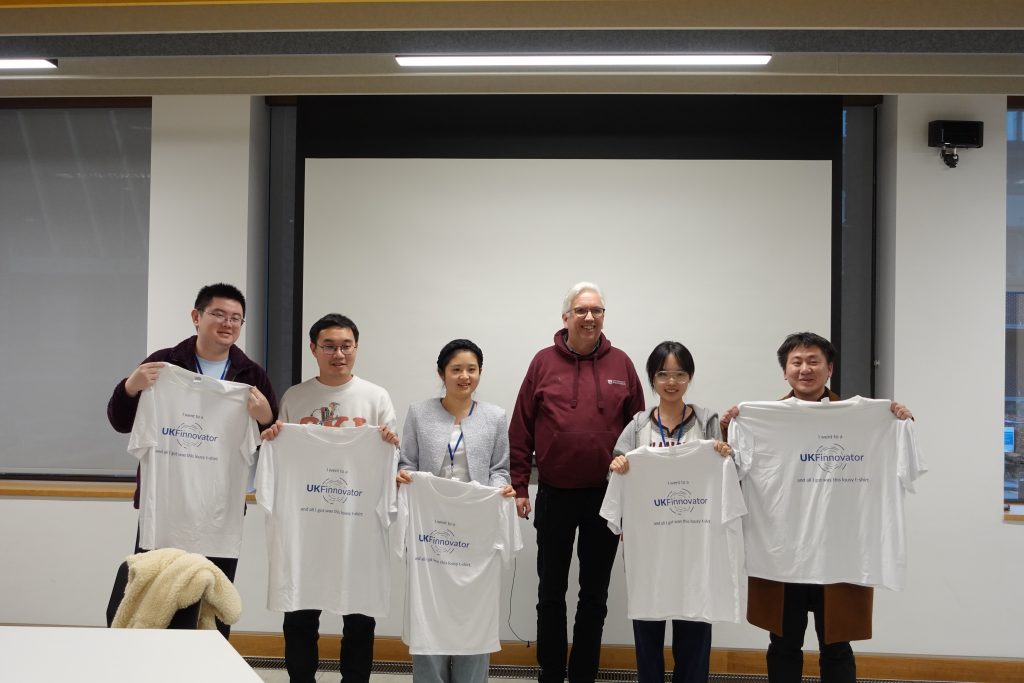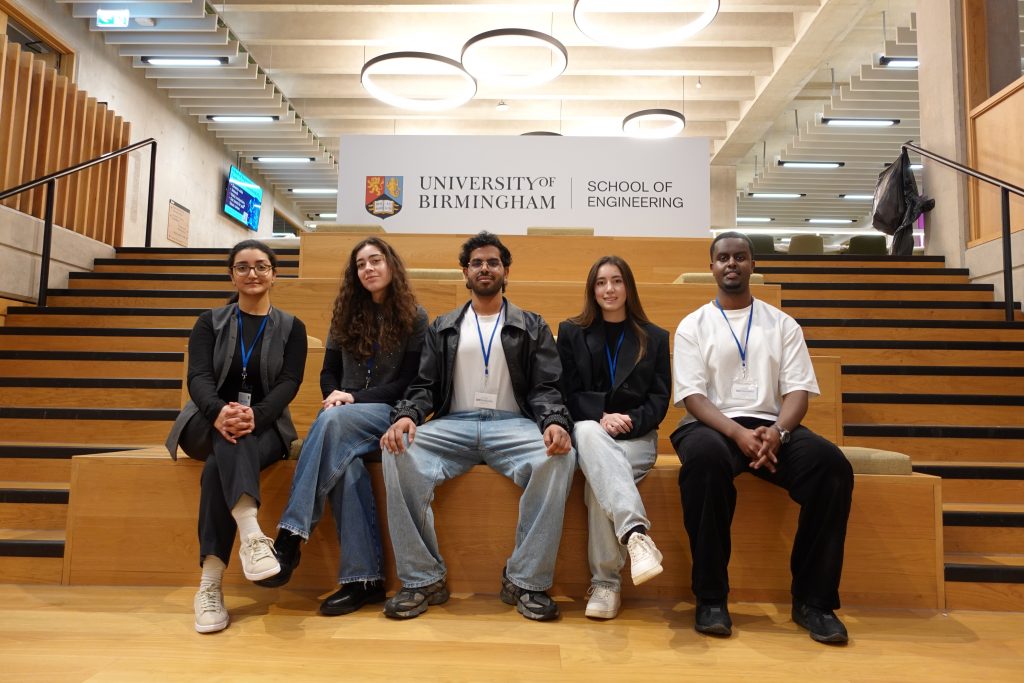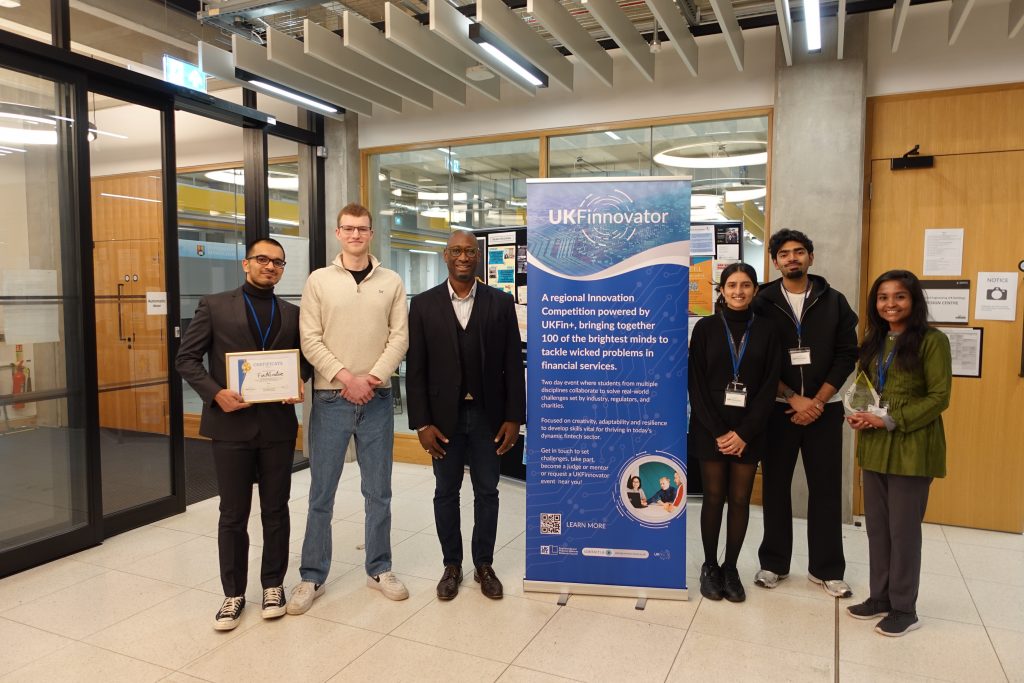
Last weekend, the UKFin+ Network delivered its first UKFinnovator at the University of Birmingham. More than 300 students applied, and 130 were selected from across the UK, some travelling significant distances to take part. They worked in multidisciplinary teams on live challenges set by companies. Instead of hypothetical case studies, students worked on genuine business challenges that were messy, complex, and rooted in real organisational constraints – the kind that keep founders up at night.
Students worked on four industry-led challenges. Teams explored how to improve large-scale software licence renewal management with Allsee Technologies, focusing on visibility, communication, and reducing service disruption across multi-site organisations. With Bettr, students tackled the foundations of a fairer social media platform, examining user control, wellbeing, trust, and ethical monetisation in a decentralised digital economy. The education-focused challenge, led by My Smart Teach (Unique Tech Solution), asked teams to model a dashboard for the return on investment of AI in schools, helping decision-makers understand the financial, productivity, and long-term impact of reducing teacher workload. Finally, the GFA Exchange challenge invited students to explore responsible AI for SME lending, addressing risk assessment, financial inclusion, and more effective capital allocation through shared financial insights.
From Ideas to Intentional Solutions
A key enabler during UKFinnovator was NoCodeLab.ai, whose AI-powered platform was used by teams throughout the weekend to structure and discipline their ideas.
Rather than jumping straight into solution-building, students were guided to clarify first what they were building and why. NoCodeLab’s AI Agent applies a proven product methodology, helping teams translate early concepts into a clear Product Requirements Document (PRD). From there, ideas were broken down into atomic prompts that guided teams step-by-step through building functional components, spanning frontend, backend, databases, security, and API integrations.
This approach fundamentally changed how teams worked. It gave multidisciplinary groups a shared language, reduced ambiguity, and helped students move quickly from abstract thinking to practical execution even under intense time pressure.
A Lesson in Vision, Authenticity, and Purpose
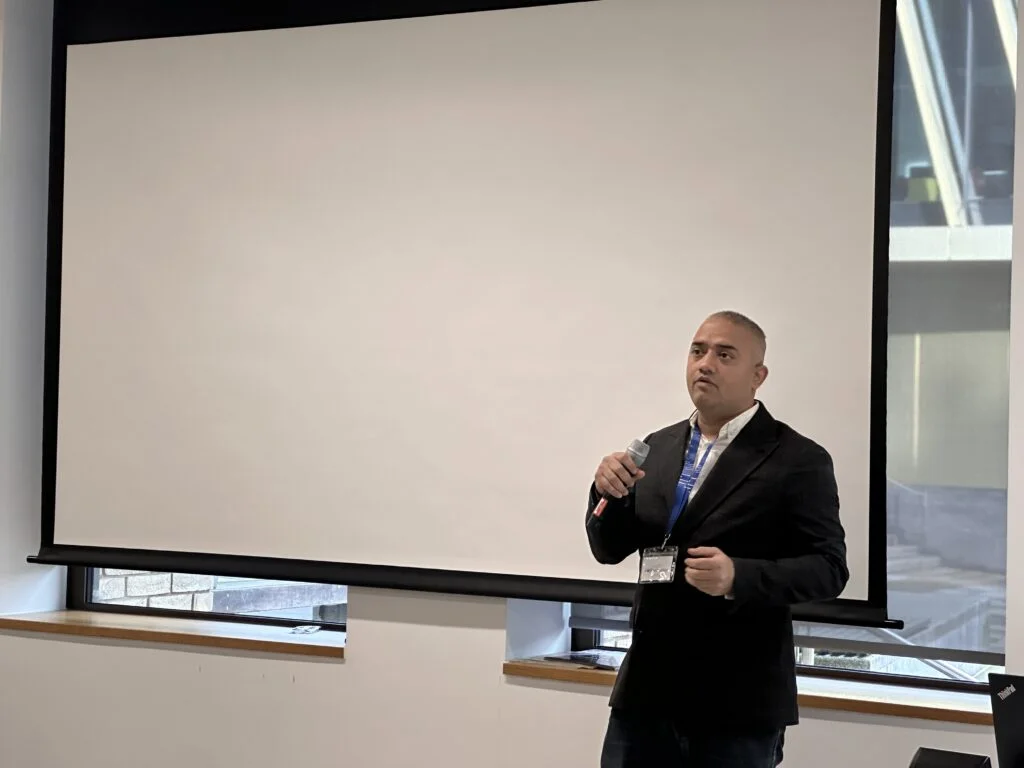
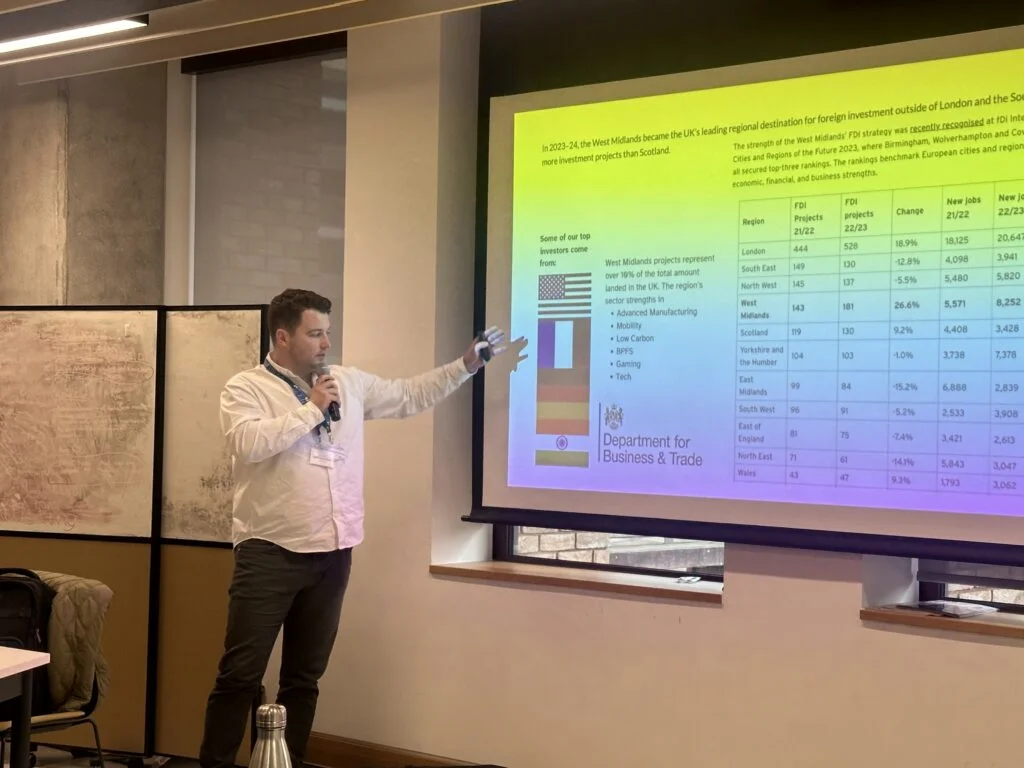
Alongside the challenge work, students benefited from a series of keynote and insight sessions. John Tsopanis, founder of Bettr, opened with a powerful session on what it really takes to succeed in a hackathon and beyond. Drawing on deep-tech innovation, John encouraged teams to focus less on surface-level features and more on identifying genuinely “wicked problems,” connecting technologies thoughtfully, and building solutions that can scale commercially.
Students also gained valuable insight into the start-up and funding journey through a session led by Jack Francis Kelly from Oxford Innovation Advice, who demystified the funding landscape and explained what investors look for when ideas move from prototype to venture. His session helped teams understand how to think about invest ability, traction, and realistic next steps beyond the weekend.
Complementing this, Abhishek Tripathi from Superteam UK offered a forward-looking perspective on the evolving digital world, highlighting where decentralised technologies, AI, and new digital ecosystems are heading and why the work students are doing now matters for the future.
A defining moment of the weekend came from Joel Blake, founder of GFA Exchange, who challenged students to think more deeply about why they build and not just what they build.
Joel highlighted the importance of clearly defining your vision, turning it from an abstract goal into a tangible success by focusing on the people, culture, and environment you create. He stressed that business success comes not from chasing labels or valuations, but from genuinely addressing real problems as customers experience them, rather than how founders envision them.
Perhaps most powerfully, he spoke about authenticity – about showing up as yourself, even when you don’t fit the mould, and believing in the value you bring regardless of background, or conventional credentials.
This message resonated deeply with students. Many were encountering, perhaps for the first time, the reality that innovation is not just about confidence but also about clarity, curiosity, and resilience.

Why This Was Worth Doing
UKFinnovator was designed to produce confidence and capability, as well as perspective, rather than polished start-ups.
Students learned how to:
- Work across disciplines under pressure
- Translate vague ideas into structured requirements
- Engage with real industry constraints
- Accept feedback, adapt, and keep moving
- See themselves as contributors, not just learners
Equally, industry partners gained something valuable: insight into how the next generation thinks, collaborates, and solves problems when given trust and responsibility. This is what bridging the skills gap looks like.
Looking Ahead
UKFinnovator was never intended to be a one-off event. Building on the momentum of this first weekend, the UKFin+ Network will be organising future UKFinnovator events across other parts of the country, using the insights and lessons from this pilot to make each iteration stronger and more impactful.
We are particularly excited about what happens after the event. Many of the solutions developed over the weekend show real promise, and we hope to see follow-ups, continued collaboration, and success stories emerge as teams take their ideas further. Just as importantly, we’ve already seen new friendships, networks, and collaborations form, which are often the best outcomes of experiences like this.
UKFinnovator was the beginning of something bigger: a platform for ideas to grow, people to connect, and confidence to build. We look forward to seeing where this journey takes our students, partners, and the wider innovation community next.